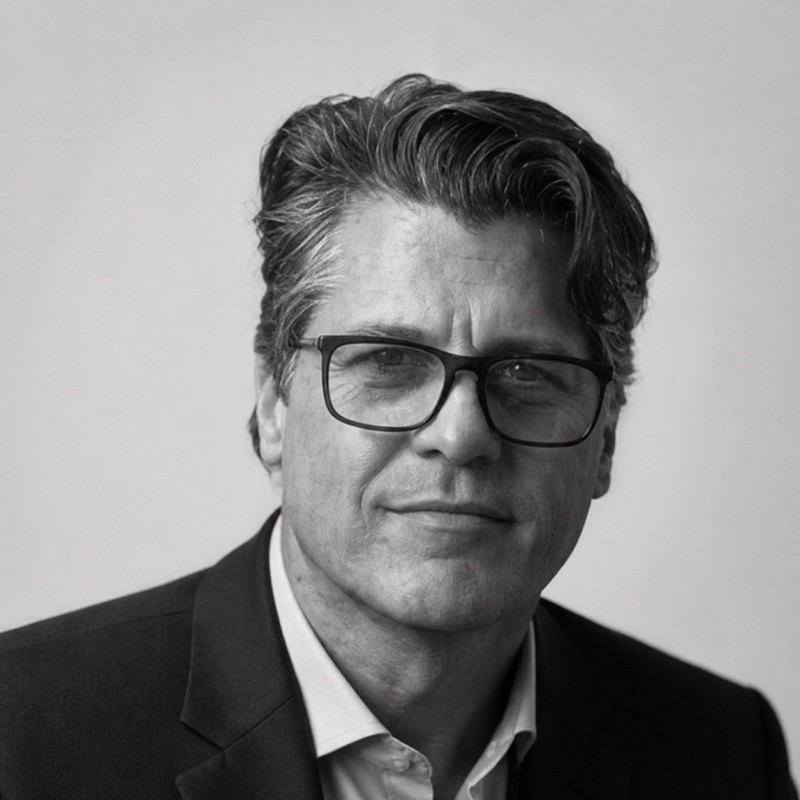
Chris Schafer is an Interim President and Interim CRO for B2B SaaS companies. He runs OnDemand Leaders from the Greater Toronto Area with his wife Elisha.
Twenty-five years inside SaaS go-to-market. Helped scale NetSuite from roughly $30M to over $1B in ARR, through IPO and into the $9.3B Oracle acquisition. As President of ImportGenius, delivered the largest revenue quarter in the company's history through an 18-month B2C-to-B2B transformation.
Engagements are typically 6 to 18 months in the President or CRO seat. He takes one at a time. The work is to take the seat, align the leadership team around one revenue plan, and leave a system that runs after he does.
I am Chris Schafer. I serve as Interim President, Interim CRO, and CEO-level operator for B2B SaaS companies that have stopped agreeing on what is actually wrong. I run OnDemand Leaders with my wife Elisha out of the Greater Toronto Area. I am the operator a board calls when the revenue plan has missed three quarters in a row and another consultant deck is not the answer.
This page is the long version. If you have ten seconds, here it is in one sentence. I take the seat, align the leadership team around one revenue plan, and leave a system that runs after I do.
The seat I take, not the role I describe.
Most engagements at this level are advisory. Someone delivers a deck. Someone runs a workshop. Someone produces a recommendation and hands it back to the team that was already overwhelmed when the recommendation was requested.
That is not what I do. I take the seat. I sit in the President or CRO chair. I run the staff meeting. I own the number. I make the calls. The CEO gets their counterpart back. The board gets a forecast they can believe. The leadership team gets a working operating rhythm instead of three different versions of the same conversation.
When I leave, the seat is either filled by a permanent hire I helped recruit, or returned to the founder with a working system underneath it. Either way, the company runs differently than the day I walked in.
What twenty-five years actually taught me.
Two companies shaped most of what I know. The full story is longer. The short version is this.
NetSuite. From $30M to $9.3B.
I joined NetSuite when it was a roughly $30M ARR business and stayed through the arc that took it past a billion, through IPO, and into the $9.3B Oracle acquisition. Fifteen years. I led teams across North America and APAC. I saw the inflections most B2B SaaS companies hit. The move from SMB to mid-market. The move from mid-market to enterprise. The shift from founder-led pipeline to a real GTM machine. The point where forecasting stops being a guess and becomes a forecast. The day pricing has to be redesigned because the model stopped working at scale.
What I took from NetSuite is the pattern library. I have sat inside the rooms where the revenue plan broke down at every one of those inflections. I know what is actually happening when sales says the leads are bad and marketing says the reps are bad and finance is restricting spend because the forecast keeps missing.
ImportGenius. President. Eighteen months.
Most recently I served as President at ImportGenius, a B2C-to-B2B transformation. I stepped in, rebuilt the GTM motion, realigned the leadership team around one revenue plan, and delivered the largest revenue quarter in the company's history. Eighteen months. One seat.
That engagement is the shape of most of the work I do now. A company in transition. A leadership team that is not aligned on the diagnosis. A number that keeps slipping. A board that is running out of patience. The work is to own it, fix the mechanics, and leave a team that does not need me to keep running.
Velocity without awareness creates friction. Chris, on what he sees in week one
How I work. The H.E.L.P. operating system.
Elisha and I built the H.E.L.P. Operating System over ten years. It is rooted in behavioral science and motivational interviewing. It is the discipline I run when I take the seat. Four phases. They are not stages. They are habits a leadership team has to build until they show up automatically.
- Hear. Stop interpreting. Listen until the person across from you confirms you understood them. Most fixed problems get fixed here.
- Evidence. Separate fact from interpretation. The forecast is fact. The story about why the forecast missed is interpretation. Treat them differently or you will miss again.
- Learn. Build the muscle of fluid learning. Pattern recognition that draws from lived experience and shows up in real time, without waiting for someone else to provide the answer.
- Proceed. Make a decision that holds. Not a decision dressed as alignment. A decision the team can defend in next week's meeting without re-litigating it.
The H.E.L.P. Operating System is co-authored. The site has a dedicated page for each phase. Start there if you want the full framework.
Who I work with. And who I do not.
I work with B2B SaaS companies at inflection points. The most common engagements look like this.
- Founder-led selling has stopped scaling. The founder closes the big deals. The reps cannot. The plan starts to depend on heroics.
- The team is moving from SMB to mid-market or enterprise. The motion that got you to $10M does not get you to $50M.
- The forecast keeps missing. Pipeline coverage looks fine on paper. The number does not land.
- A capital event is twelve months out. The bank has not been hired. The GTM story has to be ready before due diligence.
- The CEO needs a counterpart, not another report. Founder CEOs hit a point where they need someone in the seat next to them, not another person who reports up.
I do not work with companies looking for a deck. I do not work with companies who want a fractional advisor to attend a monthly call. I do not run six engagements at once. I take one seat at a time.
Based in the Greater Toronto Area. Work everywhere it matters.
Elisha and I are based in the Greater Toronto Area. Most of the leadership teams I work with are in the GTA, the broader Toronto and southern Ontario tech corridor, and across the United States. I have led teams in APAC and the UK as well, and I take international engagements where the work fits.
For Toronto and GTA founders specifically, this matters. There is a separate post about what to look for when hiring an Interim President in the GTA. Most of what is sold under that label in this market is not what it says it is.
What people actually say.
The testimonials on the homepage are from people who reported directly to me. That is the only kind of reference I share. Read them here. They are not endorsements from people I sold to. They are notes from people who saw me run the seat from the inside.
If the leadership team has stopped agreeing and the number keeps slipping, the right move is not another consultant. It is an operator who owns the seat. Apply to work with Chris. The application is short. Five minutes. You will hear back within 48 hours.
How to reach me.
The fastest path is the application. It exists because I take a small number of engagements per year and the application sorts for fit faster than a discovery call does. If a three-hour strategic session is the right starting point instead, that is here.
If you want to read more first, the cluster on this blog is where I write the patterns I see in the work. Start with why B2B SaaS revenue plans keep missing or when founder-led selling stops scaling. Both are short. Both name what is actually happening when the team feels stuck.
That is the work. That is the seat. If it matches what you are facing, the next move is yours.
About Chris Schafer. The actual answers.
Who is Chris Schafer?
Chris Schafer is an Interim President and Interim CRO for B2B SaaS companies. He runs OnDemand Leaders from the Greater Toronto Area and takes the operating seat when a leadership team has stopped agreeing on the problem. Twenty-five years inside SaaS go-to-market, from NetSuite to ImportGenius.
What companies has Chris Schafer worked at?
Chris spent fifteen years at NetSuite, helping scale the business from roughly $30M ARR to over $1B, through IPO and into the $9.3B Oracle acquisition. Most recently he served as President of ImportGenius, where he led an 18-month B2C-to-B2B transformation and delivered the largest revenue quarter in the company's history.
Where is Chris Schafer based?
Chris is based in the Greater Toronto Area. Most engagements are in the GTA, the broader Toronto and southern Ontario tech corridor, and the United States. He has also led teams in APAC and the UK and takes international engagements where the work fits.
What is the H.E.L.P. Operating System?
The H.E.L.P. Operating System is a four-phase leadership framework co-authored by Chris and Elisha Schafer. The phases are Hear, Evidence, Learn, and Proceed. It is rooted in behavioral science and motivational interviewing, and it is the discipline Chris runs inside an interim engagement.
How do you hire Chris Schafer?
Through the application at ondemandleaders.com/apply.html. The application is five minutes. Replies come within 48 hours. Chris takes a small number of interim engagements per year, typically 6 to 18 months in the President or CRO seat.
What is the difference between Chris Schafer and a typical fractional advisor?
Chris takes the seat. He runs the staff meeting, owns the number, and makes the calls. Fractional advisors typically attend a monthly call and produce recommendations. Chris does not run advisory retainers or recommendation-only engagements.
Last updated · May 2026